The challenge
Public-sector tenders in the Gulf, such as municipal works, healthcare facilities, and energy maintenance contracts, arrive as long RFP documents with hard deadlines. Run from inboxes and spreadsheets, viability decisions come late and estimators, vendor quotes, and pricing get coordinated by hand. The portal replaces that with one controlled workflow.
Our approach
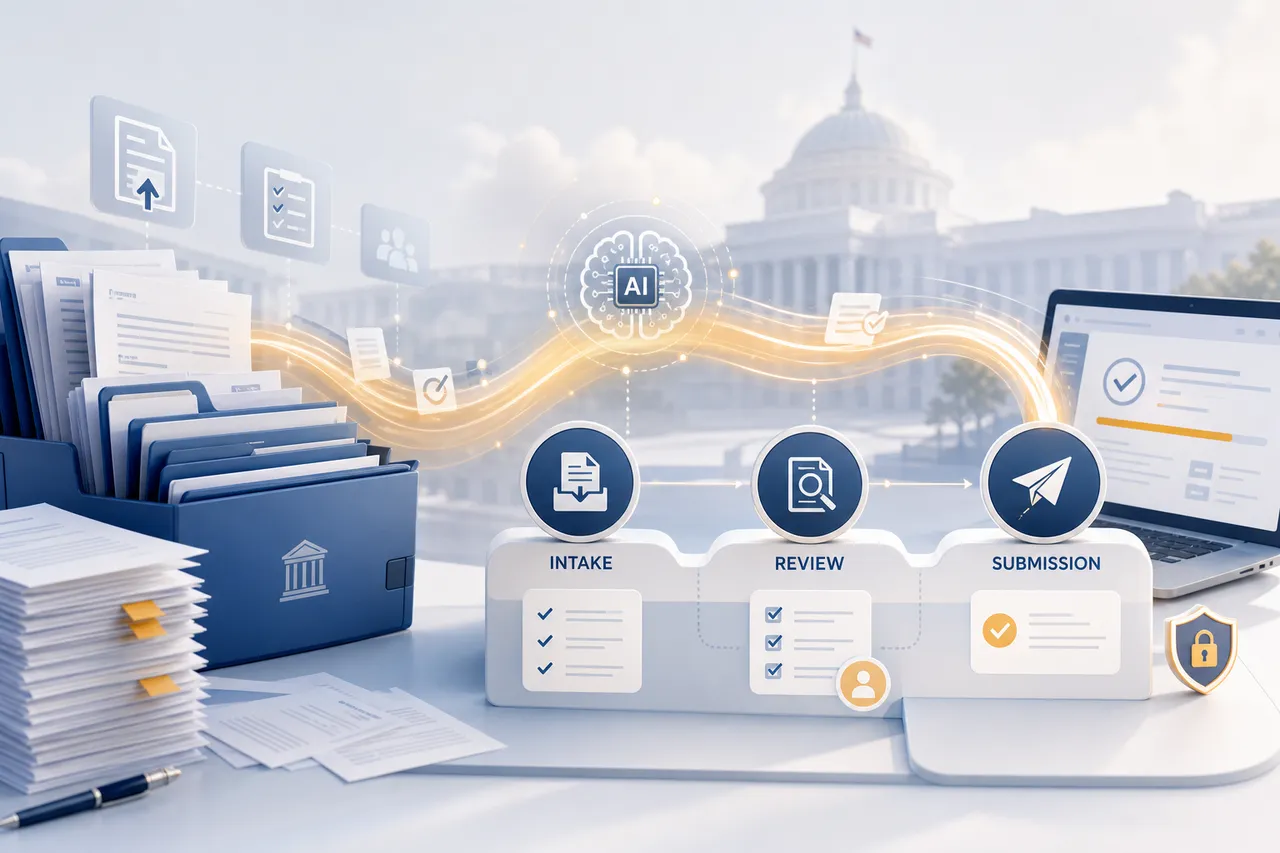
We modelled the real bid lifecycle as explicit stages: submitted, under review (scope, eligibility, and bid viability), bid preparation (estimates, vendor quotes, and pricing), bid document ready, and submitted to the issuing authority.
Clients upload a tender and track it in a client portal, while the bid team works it in an admin workspace with roles for bid managers and estimators. Every action lands in an activity log.
AI summarises long tender documents so the go/no-go call happens early, and deadline tracking keeps closing-soon bids in front of the team.
What we built
Client portal
Upload tenders, see each one's stage, and download the final bid pack.
Staged bid pipeline
Pending review, in progress, bid submitted, won, unsuccessful, and no-go, all tracked in one place.
AI tender summaries
Requirements pulled out of long RFP documents so viability is judged in minutes.
Deadline control
Upcoming deadlines surfaced on the dashboard, with closing-soon bids flagged.
Roles and audit trail
Submitters, bid managers, estimators, and admins, with an activity log of who did what.
Win/loss reporting
Status breakdowns and submissions over time to see what the pipeline is producing.